
What did Ezekiel prophecy about?
Ezekiel lived during a tumultuous time in Israel’s history.
- For centuries, prophets had warned Israel against rebelling against God and His law, yet the nation sank deeper and deeper into apostasy.
- Eventually, it became evident that the chosen people would never achieve God’s purpose for them unless drastic measures were taken to teach them lessons of obedience and cooperation with God. Accordingly, He permitted them to learn in adversity those lessons they refused to learn during times of prosperity.
- In 605 BC, King Nebuchadnezzar of Babylon marched on Jerusalem, besieged the city, and took some of the leaders of Israel captive. Among these were several members of the royal family, including Daniel.
- Despite being warned by God to cooperate with their captives, the Jews continued to rebel, and so Judah was once again invaded by Babylonian armies in 597 BC. This time 10,000 of the chief men, including Ezekiel, were taken.
Still the Jews did not repent of their evil ways, and eventually, in 586 BC, the armies of Babylon returned for the last time. Most of the people were taken captive, the glorious temple built by Solomon burned to the ground, and Jerusalem destroyed.
Who was Ezekiel?
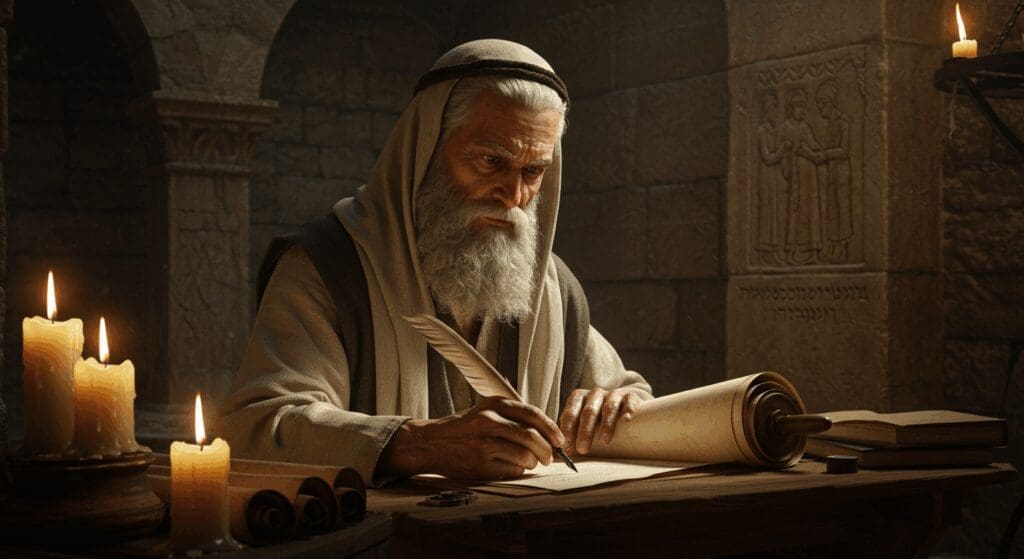
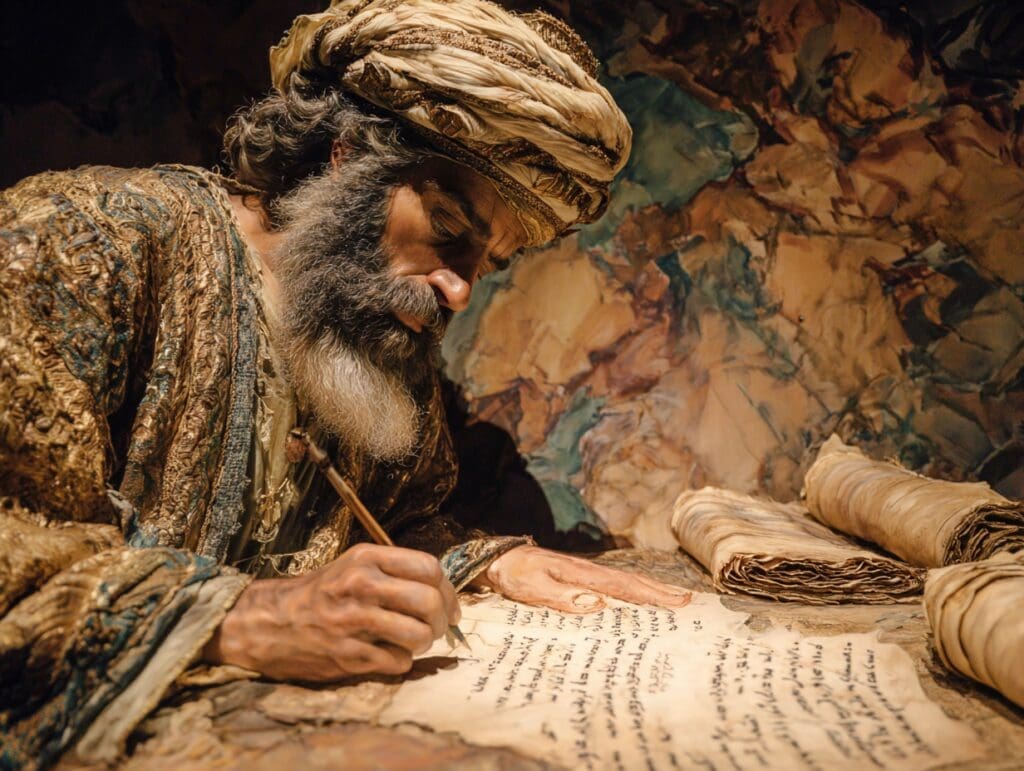
He was a priest and a prophet among the captives taken to Babylon by King Nebuchadnezzar during the second siege of 597 BC. His prophetic ministry lasted over 20 years, and his book contains a collection of visions, symbols, and appeals for cooperation with God. He was a contemporary of Jeremiah and Daniel.
God began communicating with Ezekiel during his captivity. His prophecies, as recorded in his book, fall naturally into two main divisions:
- Prophecies delivered before the destruction of Jerusalem in 586 BC. These are found in Ezekiel chapters 1-33 and were delivered to the Jewish captives by the river Chebar.
- Prophecies delivered after the destruction of Jerusalem. These are found in Ezekiel chapters 33 to 48 and were designed to inspire hope in their restoration from captivity. God used Ezekiel to make powerful appeals for the people to accept their divine destiny.
The Visions of Ezekiel.
- The vision of divine glory accompanied by his call to be a prophet of the Lord (Ezekiel 1). Before the eyes of the astonished prophet passed scenes of heavenly glory that surpass human language to describe. He saw the throne of God, and seraphim and cherubim, heavenly beings that surround the throne of the Almighty. Ezekiel compares their movements to flashes of lightning as they hasten to obey God’s commands. These beings symbolise mighty heavenly messengers in their multifaceted roles working in cooperation with God to redeem humanity.
- The vision of the abominations committed by the priests in Jerusalem which led to the destruction of their city and its beautiful temple. (Ezekiel 8 and 9).
In this vision, Ezekiel is shown a ‘great abomination’, an ‘image of jealousy,’ set up at the entrance to the temple court. This was an idol god, erected in a place dedicated to the worship of Yahweh. (8:5-6)
While still in vision Ezekiel is permitted to see the ‘wicked abominations’ committed by ‘seventy elders’, who, in great secrecy, were offering sacred incense to their idols carved into the walls of the temple chambers. (8:9-12)
Still ‘greater abominations’ were revealed in vision. At the gate of the Lord’s house, ‘there sat women weeping for Tammuz’, the god of vegetation and pasture. Under various names, this god was worshipped by the Babylonians, Assyrians, Phoenicians, and Palestinians. (8:13-14).
But even greater abominations than these awaited the view of the prophet. At the very door of the temple, twenty-five men had their backs to ‘the temple of the Lord . . . and they worshipped the sun towards the east’. (8:15-16).
In Chapter 9, Ezekiel is shown the sealing of those who sigh and cry over all these abominations. This seal was a mark of protection when God’s order to slay the wicked went out. The lesson is for God’s people today. In Revelation chapter 7 we read of a seal of protection that God will place on a faithful remnant while the plagues of Revelation 16 are poured out upon the wicked.
The vision of the valley of dry bones (Ezekiel 37). The next three major visions were given after the fall of Jerusalem and offered hope and encouragement for the people. In them, God pictured a revived and obedient people restored to their homeland and worshipping in a magnificent new temple, far exceeding the glories of Solomon’s temple. They were likened to dried bones brought back to life by the Spirit of God. “They shall not defile themselves anymore with their idols . . . I will deliver them . . . and will cleanse them. Then they shall be My people, and I will be their God” (37:23)
The Prophecy against Gog of Magog (Ezekiel 38-39).
This is a fascinating prophecy that has caused much speculation regarding the identity of Gog and Magog. A careful reading of these chapters will reveal that Gog and Magog describe a vast combination of Israel’s enemies. Satan would use these powers to invade the land and attempt to destroy God’s people. God here declares that He will protect Israel from her enemies and utterly destroy Gog and the land of Magog. This prophecy has not been fulfilled, so why was it given?
Prophecies respecting the future glory of Israel and Jerusalem are primarily conditioned on obedience. (Reference: Jeremiah 18:7-10). However, the persistent refusal of Israel to fulfill the conditions given by the prophets following its return from captivity, meant that the wonderful picture of God’s protection and the subsequent prosperity of Israel was never realized.
This does not necessarily imply that these prophecies have no further significance. In Revelation 20:8, we find the only direct New Testament reference to Ezekiel’s prophecy. Here John reveals that this prophecy will have a degree of fulfillment in the final struggle against God by vast hosts of the wicked called ‘Gog and Magog’.
As Satan influenced the heathen nations to destroy Israel, so in the end-times he will stir up the wicked powers of earth to destroy the people of God. At the end of the millennium, this agelong struggle between good and evil will ultimately be terminated by the destruction of Satan and his hosts (symbolized by Gog and Magog). (Read Revelation chapter 20 carefully and prayerfully).
The vision of the new temple (Ezekiel 40-48) Chapters 40 – 48 constitute one continuous prophecy of a unique character. They present a vision of a new temple in careful detail, a new and remarkable plan for the division of the land, and a vision of life-giving waters issuing from that magnificent temple.
This temple vision would have been literally fulfilled if the people had been faithful to their trust, but because they failed, the prophecy could not be fulfilled in its original intent. The fact that post-exile Bible writers never refer to this prophecy and the temple builders paid no attention to the plan, is probably because they were fully aware that the conditions had not been met.
So why did God take the trouble of providing such a detailed pattern of the future state? This is because God left no method untried to induce Israel to accept the high destiny originally planned for them. Despite repeated failures, God now offered them another opportunity to begin again.
To convince the Jews of the certainty of His promises, God directed Ezekiel to draw up an exact blueprint of the temple that was to be the centre of worship for the new state. Nine chapters are devoted to this temple and its services, as well as to details concerning the city and the division of the land. Unfortunately, this temple will never be built.
This is Ezekiel’s last important vision, and its magnificence and grandeur are a fitting climax to his prophetic career.
So why are Ezekiel’s prophecies vital to us today? They challenge the new Israel, spiritual Israel – the Christian church (Galatians 3:7, 29; Romans 2:28-29, 9:6-8). We are about to enter a land far more glorious than that offered to Ezekiel’s generation. Entrance, as always, is based upon certain conditions being met. This time there cannot be an indefinite delay, for restoration is no longer on a national basis. When the moment arrives, God will gather His faithful from all lands. These will inherit the rich promises, and dwell in the New Jerusalem prepared by God for the faithful of all ages. Read Revelation chapters 21 and 22, the fitting and magnificent climax to the great controversy between Christ and Satan for the hearts and minds of humanity.
Ezekiel’s prophecies contain warnings, reproofs, and encouragements to remain faithful to a covenant-keeping God who is “merciful and gracious, longsuffering, and abounding in goodness and truth, keeping mercy for thousands, forgiving iniquity and transgression and sin, and by no means clearing the guilty. . .” (Exodus 34:6-7 NKJV).